Artículo
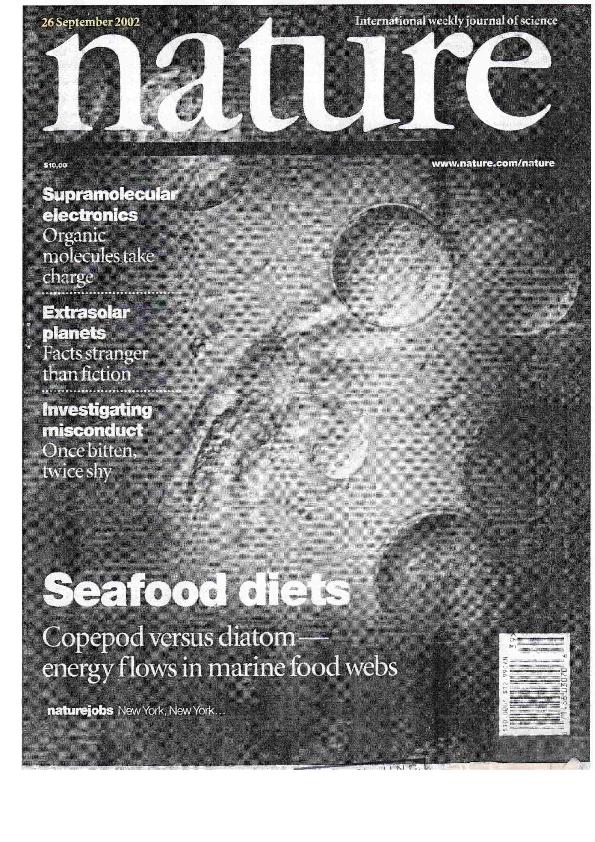
Epiparasitic plants specialized on arbuscular mycorrhizal fungi
Bidartondo, Martin I.; Redecker, Dirk; Hijri, Isabelle; Wiemken, Andres; Bruns, Thomas D.; Dominguez, Laura Susana; Sersic, Alicia Noemi ; Leake, Jonathan R.; Read, David J.
; Leake, Jonathan R.; Read, David J.
Fecha de publicación:
09/2002
Editorial:
Nature Publishing Group
Revista:
Nature
ISSN:
0028-0836
e-ISSN:
1476-4687
Idioma:
Inglés
Tipo de recurso:
Artículo publicado
Clasificación temática:
Resumen
Over 400 non-photosynthetic species from 10 families of vascular plants obtain their carbon from fungi and are thus defined as myco-heterotrophs. Many of these plants are epiparasitic on green plants from which they obtain carbon by 'cheating' shared mycorrhizal fungi. Epiparasitic plants examined to date depend on ectomycorrhizal fungi for carbon transfer and exhibit exceptional specificity for these fungi, but for most mycoheterotrophs neither the identity of the fungi nor the sources of their carbon are known. Because many myco-heterotrophs grow in forests dominated by plants associated with arbuscular mycorrhizal fungi (AMP; phylum Glomeromycota), we proposed that epiparasitism would occur also between plants linked by AMF. On a global scale AMF form the most widespread mycorrhizae, thus the ability of plants to cheat this symbiosis would be highly significant. We analysed mycorrhizae from three populations of Arachnitis uniflora (Corsiaceae, Monocotyledonae), five Voyria species and one Voyriella species (Gentianaceae, Dicotyledonae), and neighbouring green plants. Here we show that non-photosynthetic plants associate with AMF and can display the characteristic specificity of epiparasites. This suggests that AMF mediate significant inter-plant carbon transfer in nature.
Palabras clave:
Micoheterotrofas
,
Micorrizas Arbusculares
,
Plantas Epiparasitas
,
Bosques Va
Archivos asociados

Tamaño:
2.754Mb
Formato:
PDF
Licencia
 Excepto donde se diga explícitamente, este item se publica bajo la siguiente descripción:
Creative Commons Attribution-NonCommercial-ShareAlike 2.5 Unported (CC BY-NC-SA 2.5)
Excepto donde se diga explícitamente, este item se publica bajo la siguiente descripción:
Creative Commons Attribution-NonCommercial-ShareAlike 2.5 Unported (CC BY-NC-SA 2.5)
Identificadores
Colecciones
Articulos(IMBIV)
Articulos de INST.MULTIDISCIPL.DE BIOLOGIA VEGETAL (P)
Articulos de INST.MULTIDISCIPL.DE BIOLOGIA VEGETAL (P)
Citación
Bidartondo, Martin I.; Redecker, Dirk; Hijri, Isabelle; Wiemken, Andres; Bruns, Thomas D.; et al.; Epiparasitic plants specialized on arbuscular mycorrhizal fungi; Nature Publishing Group; Nature; 419; 6905; 9-2002; 389-392
Compartir


Altmétricas