Capítulo de Libro
Co-invasion of invasive trees and their associated belowground mutualists
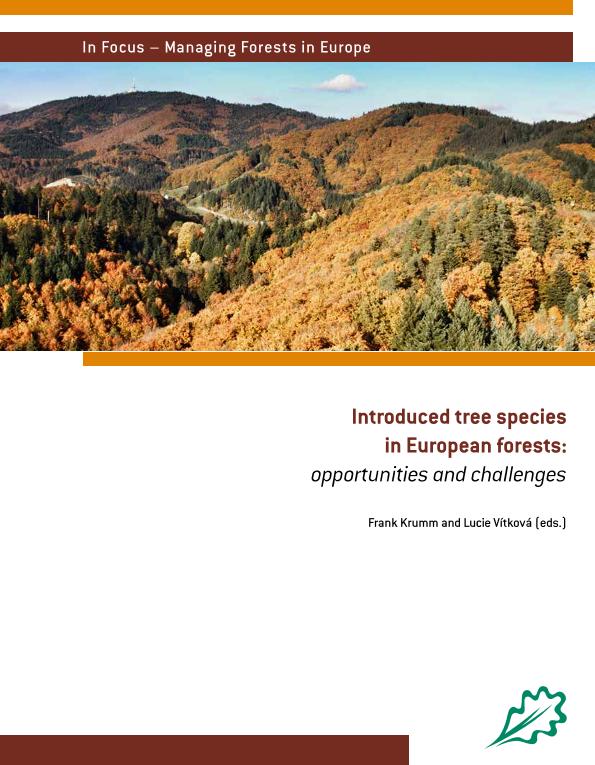
Título del libro: Introduced tree species to European forests: Opportunities and challenges

Fecha de publicación:
2016
Editorial:
European Forest Institute
ISBN:
978-952-5980-31-8
Idioma:
Inglés
Clasificación temática:
Resumen
The majority of trees need mutualistic associations to thrive and survive. This can be a fundamental limitation for their ability to colonise new areas and consequently invade them. While many non-native tree species may form associations with local mutualists that substitute those present in their native range, others, probably with a higher degree of specialisation invade along with their native range mutualists (co-invade). An example of this is the case of some figs (Ficus spp.); in the USA, these trees which have a highly specialised pollination system depending on particular species of wasps, became invasive only after their native pollinator had arrived (Richardson et al. 2000). Other examples can be found in many invasive trees that need belowground mutualists, like nitrogen-fixing symbionts and mycorrhizal fungi, to thrive in their new geographical range (e.g. Nuñez et al. 2009, Dickie et al. 2010). These soil mutualists have been found to play a key role on the invasion of numerous introduced tree species (Nuñez and Dickie 2014)...
Palabras clave:
INVASIVE SPECIES
,
FOREST
,
COINVASION
,
MYCORRHIZAL FUNGI
Archivos asociados

Tamaño:
3.230Mb
Formato:
PDF
Licencia
 Excepto donde se diga explícitamente, este item se publica bajo la siguiente descripción:
Creative Commons Attribution-NonCommercial-ShareAlike 2.5 Unported (CC BY-NC-SA 2.5)
Excepto donde se diga explícitamente, este item se publica bajo la siguiente descripción:
Creative Commons Attribution-NonCommercial-ShareAlike 2.5 Unported (CC BY-NC-SA 2.5)
Identificadores
Colecciones
Capítulos de libros(CCT - PATAGONIA NORTE)
Capítulos de libros de CTRO.CIENTIFICO TECNOL.CONICET - PATAGONIA NORTE
Capítulos de libros de CTRO.CIENTIFICO TECNOL.CONICET - PATAGONIA NORTE
Capítulos de libros(INIBIOMA)
Capítulos de libros de INST. DE INVEST.EN BIODIVERSIDAD Y MEDIOAMBIENTE
Capítulos de libros de INST. DE INVEST.EN BIODIVERSIDAD Y MEDIOAMBIENTE
Citación
Nuñez, Martin Andres; Policelli, Nahuel; Dimarco, Romina Daniela; Co-invasion of invasive trees and their associated belowground mutualists; European Forest Institute; 2016; 94-101
Compartir

