Mostrar el registro sencillo del ítem
dc.contributor.author
García, Adolfo Martín
dc.date.available
2025-10-27T13:37:39Z
dc.date.issued
2012-04
dc.identifier.citation
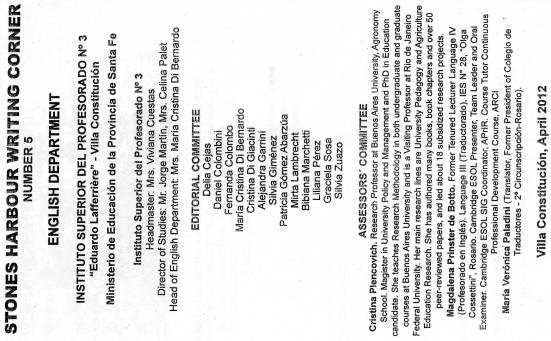
García, Adolfo Martín; What Makes Pale Fire a Novel? Structural Reflections on Genre; Instituto Superior del Profesorado Nro. 3 "Eduardo Lafferriere"; Stones Harbour Writing Corner; 5; 4-2012; 93-106
dc.identifier.issn
1668-0545
dc.identifier.uri
http://hdl.handle.net/11336/274076
dc.description.abstract
The reader who opens Nabokov’s Pale Fire first faces a text –rather, a constellation of texts– which does not have even the slightest semblance of a novel. In fact, he or she will find, in this order, a ‘Foreword’ to a poem, a 999-line poem of four cantos in heroic couplets, an extended ‘Commentary’ section, and a brief ‘Index’ at the end. Furthermore, none of these four texts in isolation is a novel in its own right. From a structuralist stance, it proves interesting to explore how it is that a poem and three metatexts make up a novel. As it happens, Pale Fire does not reveal itself outwardly as a novel. Consequently, if certain criteria are to be specified to place it within the novelistic genre, they will have formulated in terms of reading processes, rather than in terms of the distributional and organizational features a text must present. In the words of Culler (1975, 113), »[t]he [literary] work has structure and meaning because it is read in a particular way, because [its] potential properties, latent in the object itself, are actualized by the theory of discourse applied in the act of reading.« Indeed, Pale Fire’s novelistic structure is covert under the guise of an annotated poem. Given these preliminaries, a genre could be defined as a set of conventional expectations leading the reader to process a text in a culturally-assimilated way. Among other things, this means that the structure and meaning of a text will ultimately be determined by reference to a system of previously acquired conventions. In the case of the novel, these conventions involve a number of key interweaving dimensions, whose features constitute functional categories governing not just the reading, but also the writing of the genre. Following this line of thought, the present paper offers a reader-based structuralist analysis of Nabokov’s Pale Fire (1962). On the basis of Culler’s classical 1975 model, the claim is advanced that Pale Fire, despite its disintegration of novelistic standards, definitely belongs within the novelistic genre, as it articulates the central exegetic dimensions governing the reading (and writing) of novels. Specifically, Nabokov’s piece is presently shown to comply with the genre’s conventions in terms of (i) formal realism, (ii) plot structure, and (iii) theme construction. First, Pale Fire abounds in elements of formal realism. The piece presents a meaningful human world, mainly through the use of standard techniques of characterization, name-character interplay, and background construction through mimesis. In short, Pale Fire can be initially naturalized as a novel because the expectation to find a meaningful human world through formal realism is met at the level of characterization and setting, and it is aided by the conventional use of largely referential language. Second, the piece’s plot structure is marked with novelistic elements. Culler (1975, 203) distinguishes two reading strategies as »undoubted components of the novel« insofar as plot construction is concerned. On the one hand, the proairetic function governs the reader’s construction of plot through hypotheses anticipating action resolution; on the other hand, the hermeneutic function involves the progressive formulation of questions and answers, the recognition of enigmas and solutions. As it happens, Pale Fire provides the reader with a plot that can be unfolded and interpretively built along the abovementioned strategies, regardless of the textual position and distribution of its components. Finally, Nabokov’s book is shown to enact its main theme in the same way as novels with a more standard internal organization. In particular, the theme of thievery is demonstrated to be exegetically constructed as such as the reader extrapolates information from textual elements which can be then assigned to an overarching semantic/semological function. What is more, the unusual configuration of sections in Nabokov’s book is argued to actually contribute to the construction of said theme. In other words, Pale Fire is adduced to project conventional theme-construction operations onto its multitextual structure, so that, in this regard at least, it proves to be even more novelistic than the standard novel. From a more general perspective, the paper seeks to demonstrate that a literary text does not emerge as a novel because of the organization and/or distribution of its constituting elements (e.g., subtexts). On the contrary, it is argued that a novel can only be recognized as such by the reader at a high-order semantic level, as constellations of meaning make up conventionally recognizable patterns in the dimensions of characterization, setting, plot and theme. In this sense, this analysis of an outwardly unconventional novel is instrumental to understanding what it means for a piece of literature to be classified as pertaining to the novelistic genre.
dc.format
application/pdf
dc.language.iso
eng
dc.publisher
Instituto Superior del Profesorado Nro. 3 "Eduardo Lafferriere"
dc.rights
info:eu-repo/semantics/openAccess
dc.rights.uri
https://creativecommons.org/licenses/by-nc-sa/2.5/ar/
dc.subject
STRUCTURALISM
dc.subject
GENRE
dc.subject
PROCESSING
dc.subject
PALE FIRE
dc.subject.classification
Estudios Generales de Literatura
dc.subject.classification
Lengua y Literatura
dc.subject.classification
HUMANIDADES
dc.title
What Makes Pale Fire a Novel? Structural Reflections on Genre
dc.type
info:eu-repo/semantics/article
dc.type
info:ar-repo/semantics/artículo
dc.type
info:eu-repo/semantics/publishedVersion
dc.date.updated
2025-10-08T10:28:14Z
dc.journal.number
5
dc.journal.pagination
93-106
dc.journal.pais
Argentina
dc.journal.ciudad
Villa Constitución
dc.description.fil
Fil: García, Adolfo Martín. Consejo Nacional de Investigaciones Científicas y Técnicas; Argentina. Universidad Nacional de Córdoba. Facultad de Lenguas; Argentina
dc.journal.title
Stones Harbour Writing Corner
Archivos asociados

Tamaño:
6.727Mb
Formato:
PDF