Mostrar el registro sencillo del ítem
dc.contributor.author
Gloriani, Alejandro
dc.contributor.author
Matezanz, Beatriz
dc.contributor.author
Barrionuevo, Pablo Alejandro
dc.contributor.author
Arranz, Isabel
dc.contributor.author
Issolio, Luis Alberto
dc.contributor.author
Mar, Santiago
dc.contributor.author
Aparicio, Juan Antonio
dc.date.available
2025-10-14T13:22:18Z
dc.date.issued
2015
dc.identifier.citation
A model for foveal and parafoveal sensitivity that could help our understanding about light adaptation; The 23rd Symposium of the International Colour Vision Society; Sendai; Japón; 2015; 66-66
dc.identifier.isbn
978-4-9908469-0-9
dc.identifier.uri
http://hdl.handle.net/11336/273428
dc.description.abstract
The understanding of the mechanisms involved in light adaptation is a challenge not completely solved. Here, we present a model based on visual mechanisms described in the physiological and psychophysical literature able to fit psychophysical data in several stimuli conditions. We propose that the study of changes in the different mechanism and phenomena considered in our model could be a strategy to better understand light adaptation. We used a two-channel Maxwellian view optical system to measure detection luminance thresholds with the method of limits for steady and transient (SOA300) backgrounds field. With data for different retinal eccentricities (0°-15°), and adaptation luminances (0.06-110 cd/m2), preliminary results of this model were reported in a previous ICVS meeting. In this occasion we performed new measurements considering different combinations of background/test size, 10°/2°, 10°/0.45° and 1°/0.45°, and a final version of the model is presented. For steady backgrounds we describe how spatial summation changes with eccentricity and we associate this behaviour with increases in the receptive field sizes. We report changes in subtractive adaptation with both eccentricity and background field size and we connect these changes with horizontal cells and changes in their dendritic field size with eccentricity. Additionally, when we reduce the background field size, we propose that the increase in the thresholds is related with rod-cone interactions and photon noise. For transient backgrounds, we show how the gradual shift in the site of the gain control can explain the data. Finally, we believe this strategy is an interesting way to better understand the behaviour of the different visual mechanisms and phenomena involved in retinal light adaptation.
dc.format
application/pdf
dc.language.iso
eng
dc.publisher
Tohoku University
dc.rights
info:eu-repo/semantics/openAccess
dc.rights.uri
https://creativecommons.org/licenses/by-nc-sa/2.5/ar/
dc.subject
LIGHT ADAPTATION
dc.subject
PERIPHERAL VISION
dc.subject
MESOPIC
dc.subject.classification
Otras Ingeniería Médica
dc.subject.classification
Ingeniería Médica
dc.subject.classification
INGENIERÍAS Y TECNOLOGÍAS
dc.title
A model for foveal and parafoveal sensitivity that could help our understanding about light adaptation
dc.type
info:eu-repo/semantics/publishedVersion
dc.type
info:eu-repo/semantics/conferenceObject
dc.type
info:ar-repo/semantics/documento de conferencia
dc.date.updated
2025-09-02T15:30:19Z
dc.journal.pagination
66-66
dc.journal.pais
Japón
dc.journal.ciudad
Sendai
dc.description.fil
Fil: Gloriani, Alejandro. Universidad de Valladolid. Facultad de Ciencias; España
dc.description.fil
Fil: Matezanz, Beatriz. Universidad de Valladolid. Facultad de Ciencias; España
dc.description.fil
Fil: Barrionuevo, Pablo Alejandro. Consejo Nacional de Investigaciones Científicas y Técnicas. Centro Científico Tecnológico Conicet - Tucumán. Instituto de Investigación en Luz, Ambiente y Visión. Universidad Nacional de Tucumán. Facultad de Ciencias Exactas y Tecnología. Instituto de Investigación en Luz, Ambiente y Visión; Argentina. University of Illinois; Estados Unidos
dc.description.fil
Fil: Arranz, Isabel. Universidad de Valladolid. Facultad de Ciencias; España
dc.description.fil
Fil: Issolio, Luis Alberto. Consejo Nacional de Investigaciones Científicas y Técnicas. Centro Científico Tecnológico Conicet - Tucumán. Instituto de Investigación en Luz, Ambiente y Visión. Universidad Nacional de Tucumán. Facultad de Ciencias Exactas y Tecnología. Instituto de Investigación en Luz, Ambiente y Visión; Argentina. Universidad Nacional de Tucumán. Facultad de Ciencias Exactas y Tecnología. Departamento de Luminotecnia, Luz y Visión; Argentina
dc.description.fil
Fil: Mar, Santiago. Universidad de Valladolid. Facultad de Ciencias; España
dc.description.fil
Fil: Aparicio, Juan Antonio. Universidad de Valladolid. Facultad de Ciencias; España
dc.conicet.rol
Autor
dc.conicet.rol
Autor
dc.conicet.rol
Autor
dc.conicet.rol
Autor
dc.conicet.rol
Autor
dc.conicet.rol
Autor
dc.conicet.rol
Autor
dc.coverage
Internacional
dc.type.subtype
Simposio
dc.description.nombreEvento
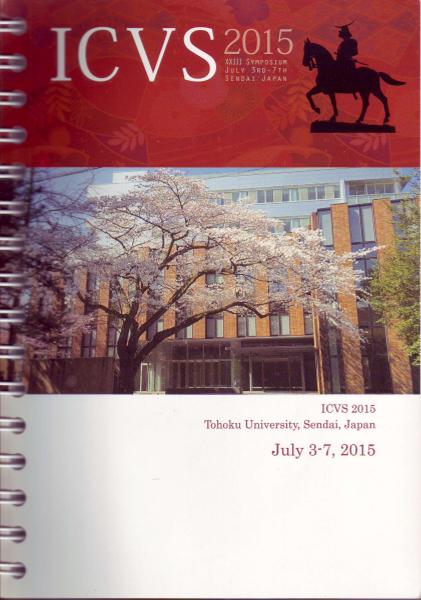
The 23rd Symposium of the International Colour Vision Society
dc.date.evento
2015-07-03
dc.description.ciudadEvento
Sendai
dc.description.paisEvento
Japón
dc.type.publicacion
Book
dc.description.institucionOrganizadora
International Colour Vision Society
dc.source.libro
The 23rd Symposium of the International Colour Vision Society Abstract Book
dc.date.eventoHasta
2015-07-07
dc.type
Simposio
Archivos asociados

Tamaño:
2.069Mb
Formato:
PDF