Mostrar el registro sencillo del ítem
dc.contributor.author
Tapia, Cinthya Mariela
dc.contributor.author
Suares, Alejandra Carolina
dc.contributor.author
González Pardo, María Verónica
dc.contributor.other
Davis, Roger
dc.date.available
2024-12-23T11:27:37Z
dc.date.issued
2018
dc.identifier.citation
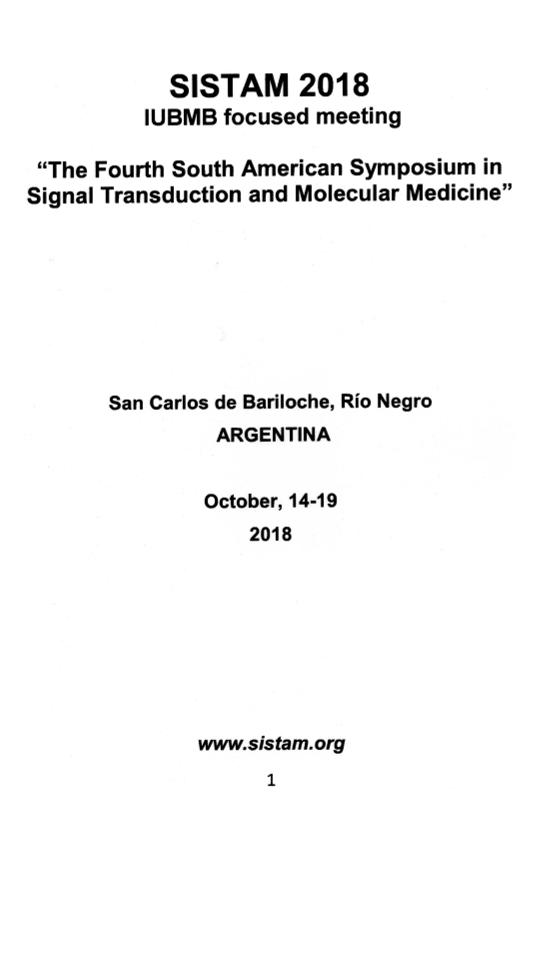
1α,25(oh)2d3 modulates inflammation in endothelial cells transformed by vgpcr as part of its antineoplastic mechanism; SISTAM 2018: The Fourth South American Symposium in Signal Transduction and Molecular Medicine; San Carlos de Bariloche; Argentina; 2018; 73-73
dc.identifier.uri
http://hdl.handle.net/11336/251028
dc.description.abstract
KS-associated herpesvirus G protein-coupled receptor (KSHV/vGPCR) is the key molecule in Kaposi?s sarcoma. vGPCR continuous expression and activity are required for tumor preservation. We have previously shown 1α,25(OH)2D3 antineoplastic effect in endothelial cells expressing vGPCR by negative modulation of NF-κB pro-inflammatory pathway. In this work, we further explored 1α,25(OH)2D3 anti-inflammatory mechanism of action. For this purpose, the activity and expression of COX-2, head enzyme to produce prostaglandins (PGs), 15-hydroxy-prostaglandin dehydrogenase (15-PGDH) which inactivates PGE2 and the four different PGs receptors (EP1-4) were analyzed after 1α,25(OH)2D3 treatment. MTS and proliferation assays were used to determine cell metabolism and proliferation before and after 1α,25(OH)2D3 (10 nM); ATK (10-20 µM), PLA2 inhibitor; and Celecoxib (10-20 µM), COX-2 selective inhibitor. Morphological changes and cell number decrease were observed in a dose-dependent manner. Contrary to what was expected, COX-2 gene expression increased after different times of 1α,25(OH)2D3 (10 nM) treatment. This increment was found to be VDR dependent, using a stable VDR knock-down cell line vGPCR-shVDR. However, when COX-2 expression was higher (up to 24 h), its peroxidase activity was lower. Finally, after longer 1α,25(OH)2D3-treatment periods (12 h or more) 15-PGDH and EP1 and EP2 low affinity receptors gene expression was elevated counter to EP3 and EP4 high affinity receptors, which gene expression was found decayed. All together, these results suggest that despite 1α,25(OH)2D3 enhances vGPCR-induced endothelial inflammation due to COX-2 increased expression, it also behaves as an attenuator of inflammation. Supported by grants from CONICET 11220150100057CO and FONCyT PICT-2013-0552 to Veronica Gonzalez-Pardo.
dc.format
application/pdf
dc.language.iso
eng
dc.publisher
Sociedad de Bioquímica y Biología Molecular de Chile
dc.relation
https://www.sbbmch.cl/the-fourth-south-american-symposium-in-signal-transduction-and-molecular-medicine/
dc.rights
info:eu-repo/semantics/openAccess
dc.rights.uri
https://creativecommons.org/licenses/by-nc-sa/2.5/ar/
dc.subject
VITAMIN D
dc.subject
INFLAMMATION
dc.subject
COX-2
dc.subject
vGPCR CELLS
dc.subject.classification
Bioquímica y Biología Molecular
dc.subject.classification
Ciencias Biológicas
dc.subject.classification
CIENCIAS NATURALES Y EXACTAS
dc.title
1α,25(oh)2d3 modulates inflammation in endothelial cells transformed by vgpcr as part of its antineoplastic mechanism
dc.type
info:eu-repo/semantics/publishedVersion
dc.type
info:eu-repo/semantics/conferenceObject
dc.type
info:ar-repo/semantics/documento de conferencia
dc.date.updated
2022-04-21T17:18:48Z
dc.journal.volume
1
dc.journal.number
1
dc.journal.pagination
73-73
dc.journal.pais
Argentina
dc.journal.ciudad
San Carlos de Bariloche
dc.description.fil
Fil: Tapia, Cinthya Mariela. Consejo Nacional de Investigaciones Científicas y Técnicas. Centro Científico Tecnológico Conicet - Bahía Blanca. Instituto de Ciencias Biológicas y Biomédicas del Sur. Universidad Nacional del Sur. Departamento de Biología, Bioquímica y Farmacia. Instituto de Ciencias Biológicas y Biomédicas del Sur; Argentina
dc.description.fil
Fil: Suares, Alejandra Carolina. Universidad Nacional del Sur. Departamento de Biología, Bioquímica y Farmacia. Cátedra de Química Biológica; Argentina. Consejo Nacional de Investigaciones Científicas y Técnicas. Centro Científico Tecnológico Conicet - Bahía Blanca. Instituto de Ciencias Biológicas y Biomédicas del Sur. Universidad Nacional del Sur. Departamento de Biología, Bioquímica y Farmacia. Instituto de Ciencias Biológicas y Biomédicas del Sur; Argentina
dc.description.fil
Fil: González Pardo, María Verónica. Universidad Nacional del Sur. Departamento de Biología, Bioquímica y Farmacia. Cátedra de Química Biológica; Argentina. Consejo Nacional de Investigaciones Científicas y Técnicas. Centro Científico Tecnológico Conicet - Bahía Blanca. Instituto de Ciencias Biológicas y Biomédicas del Sur. Universidad Nacional del Sur. Departamento de Biología, Bioquímica y Farmacia. Instituto de Ciencias Biológicas y Biomédicas del Sur; Argentina
dc.relation.alternativeid
info:eu-repo/semantics/altIdentifier/url/https://www.sbbmch.cl/the-fourth-south-american-symposium-in-signal-transduction-and-molecular-medicine/
dc.conicet.rol
Autor
dc.conicet.rol
Autor
dc.conicet.rol
Autor
dc.conicet.nroedicion
1
dc.coverage
Internacional
dc.type.subtype
Congreso
dc.description.nombreEvento
SISTAM 2018: The Fourth South American Symposium in Signal Transduction and Molecular Medicine
dc.date.evento
2018-10-14
dc.description.ciudadEvento
San Carlos de Bariloche
dc.description.paisEvento
Argentina
dc.type.publicacion
Book
dc.description.institucionOrganizadora
Consejo Nacional de Investigaciones Científicas y Técnicas
dc.description.institucionOrganizadora
Agencia Nacional de Promoción de la Investigación, el Desarrollo Tecnológico y la Innovación
dc.source.libro
The Fourth South American Symposium in Signal transduction and Molecular Medicine
dc.date.eventoHasta
2018-10-19
dc.type
Congreso
Archivos asociados

Tamaño:
1.538Mb
Formato:
PDF