Mostrar el registro sencillo del ítem
dc.contributor.author
Rubiolo, María Florencia
dc.contributor.author
Fiore Viani, Jorge Gonzalo
dc.contributor.other
Astroza Suarez, Paulina
dc.contributor.other
Laschi, Giuliana
dc.contributor.other
Oddone, Nahuel
dc.contributor.other
Torres Jarrin, Mario
dc.date.available
2024-12-12T10:39:24Z
dc.date.issued
2023
dc.identifier.citation
Rubiolo, María Florencia; Fiore Viani, Jorge Gonzalo; Paradiplomacy and cooperation in the Pandemic era: A review from China in Latin America; Peter Lang; 115; 2023; 119-137
dc.identifier.isbn
978-2-87574-427-2
dc.identifier.issn
0944-2294
dc.identifier.uri
http://hdl.handle.net/11336/250286
dc.description.abstract
The global pandemic has faced humanity with one of the most devastating, disruptive, and unequal crises of recent times. The collapse of world trade that had been dragging years of economic deceleration after the 2008 crisis; the general closure of borders; the interruption of commercial and productive activities; the fall in employment rates and the increase in the level of world poverty are some of the immediate consequences of this ongoing catastrophe. Unequivocally, the pandemic also brought to our attention the utter fragility of our health and distribution systems and the profound inequities that pierce and divide the globe. The overwhelming differences between hemispheres, countries, and regional or provincial units within the States were catalysts for an uneven response capacity to the health emergency, which had a greater impact on the less developed territories. Latin America, one of the most affected regions, suffered deep setbacks. According to figures from the International Labor Organization, during the year 2020 the decrease in employment was equivalent to 33 million jobs. That year, the fall in terms of economic growth represented 6.8% according to Economic Council of Latin America and the Caribbean (ECLAC) – the worst hit region in the world –, and the poverty rate reached 33%, the highest figure since 2002 in the region. All of them with greater impact on minorities such as indigenous communities, children, and women.
dc.format
application/pdf
dc.language.iso
eng
dc.publisher
Peter Lang
dc.rights
info:eu-repo/semantics/openAccess
dc.rights.uri
https://creativecommons.org/licenses/by-nc-nd/2.5/ar/
dc.subject
PARADIPLOMACIA
dc.subject
CHINA
dc.subject
ARGENTINA
dc.subject
DIPLOMACIA SUBNACIONAL
dc.subject.classification
Otras Ciencia Política
dc.subject.classification
Ciencia Política
dc.subject.classification
CIENCIAS SOCIALES
dc.title
Paradiplomacy and cooperation in the Pandemic era: A review from China in Latin America
dc.type
info:eu-repo/semantics/publishedVersion
dc.type
info:eu-repo/semantics/bookPart
dc.type
info:ar-repo/semantics/parte de libro
dc.date.updated
2024-11-28T16:28:25Z
dc.journal.volume
115
dc.journal.pagination
119-137
dc.journal.pais
Bélgica
dc.journal.ciudad
Bruselas
dc.description.fil
Fil: Rubiolo, María Florencia. Consejo Nacional de Investigaciones Científicas y Técnicas. Centro Científico Tecnológico Conicet - Córdoba. Centro de Investigaciones y Estudios sobre Cultura y Sociedad. Universidad Nacional de Córdoba. Centro de Investigaciones y Estudios sobre Cultura y Sociedad; Argentina
dc.description.fil
Fil: Fiore Viani, Jorge Gonzalo. Consejo Nacional de Investigaciones Científicas y Técnicas. Centro Científico Tecnológico Conicet - Córdoba. Centro de Investigaciones y Estudios sobre Cultura y Sociedad. Universidad Nacional de Córdoba. Centro de Investigaciones y Estudios sobre Cultura y Sociedad; Argentina
dc.relation.alternativeid
info:eu-repo/semantics/altIdentifier/url/https://www.peterlang.com/document/1337904
dc.conicet.paginas
186
dc.source.titulo
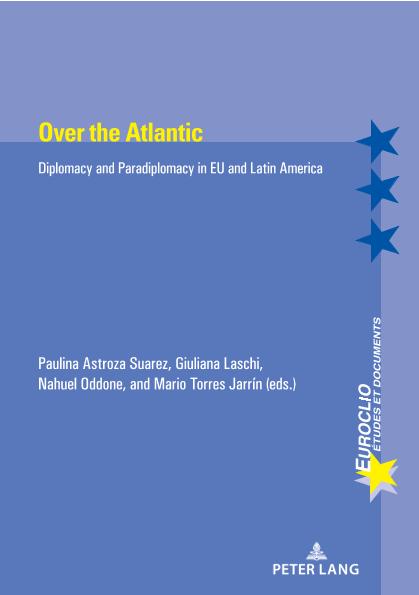
Over The Atlantic: Diplomacy and Paradiplomacy in EU and Latin America
Archivos asociados

Tamaño:
1.779Mb
Formato:
PDF